
Selma Criminal History Checks
A Selma search can begin with Police, the Town Clerk, the Johnston sheriff, or the county clerk. The choice turns on the record. Selma Police is the first custodian for department reports. The Town Clerk is the town's general public-record contact. The sheriff shows current Johnston jail custody. North Carolina eCourts and the Clerk of Superior Court show filed state charges and court outcomes. NCSBI provides the fingerprint-based Right to Review for a person's own statewide record.
Use exact facts when moving between sources. The same event can have a Selma incident number, a jail booking, and a different court case number. A five-step search preserves those links:
- Ask Selma Police for the incident, arrest, or accident report created by the department.
- Use the Town Clerk channel for a general municipal public-record request or routing help.
- Check the Johnston active-inmate inquiry and call the jail when recent custody is unclear.
- Search eCourts by name or case number with Johnston selected, then verify through the clerk.
- Use SBI Right to Review for your own fingerprint-linked statewide criminal history.
Note: Selma police, town, jail, court, and SBI sources cover different parts of an event and do not merge into one file.
Selma Police Report Counter
The official Selma Police page says an accident report may be viewed or requested at the department Monday through Friday from 8 a.m. to 5 p.m. Police should also be the first contact for a Selma incident or public arrest record created by its officers. Bring or provide the crash, incident, or report number if known, plus the event date, time, location, and involved-party information.
The official Police page is shown below as the source for Selma's report channel.
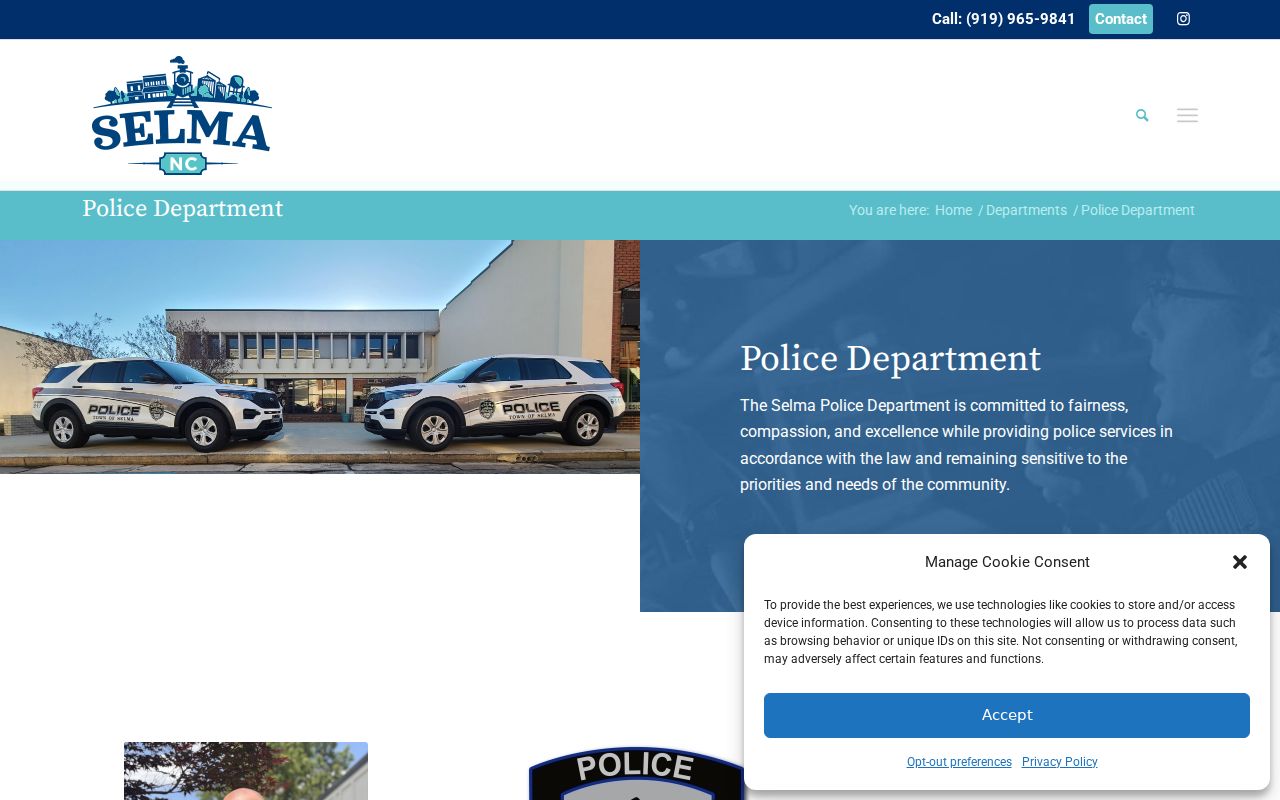
It supports a city-level report request, but a final charge or disposition must still be found through Johnston courts.
Records at the Selma Police Department
A focused Selma Police request should name the exact existing record. Include requester contact information, incident or report number, date and time, place, involved-party details, and whether the desired item is a crash report, incident report, or public arrest facts. State a delivery preference and ask whether certification or a fee applies. Research did not locate a fixed Selma form or base charge, so do not send an assumed payment.
The Police Department is not a full criminal-history repository. Its report reflects the agency's work at the incident stage. The court may later file different charges, dismiss a count, accept a plea, or enter another result. Use the police copy to identify the event, then use eCourts and the clerk to follow the prosecution.
Selma Clerk and Police Records
Selma uses two town-level access channels with distinct roles. Police is the direct custodian for police investigative and incident material. The Selma “How Do I” page identifies the Town Clerk at town-clerk@selma-nc.com for municipal public records. A request for a police report should go to Police first, while the Town Clerk can route a broader town request or address another municipal record.
The town routing page appears below from the official Selma public-record source.
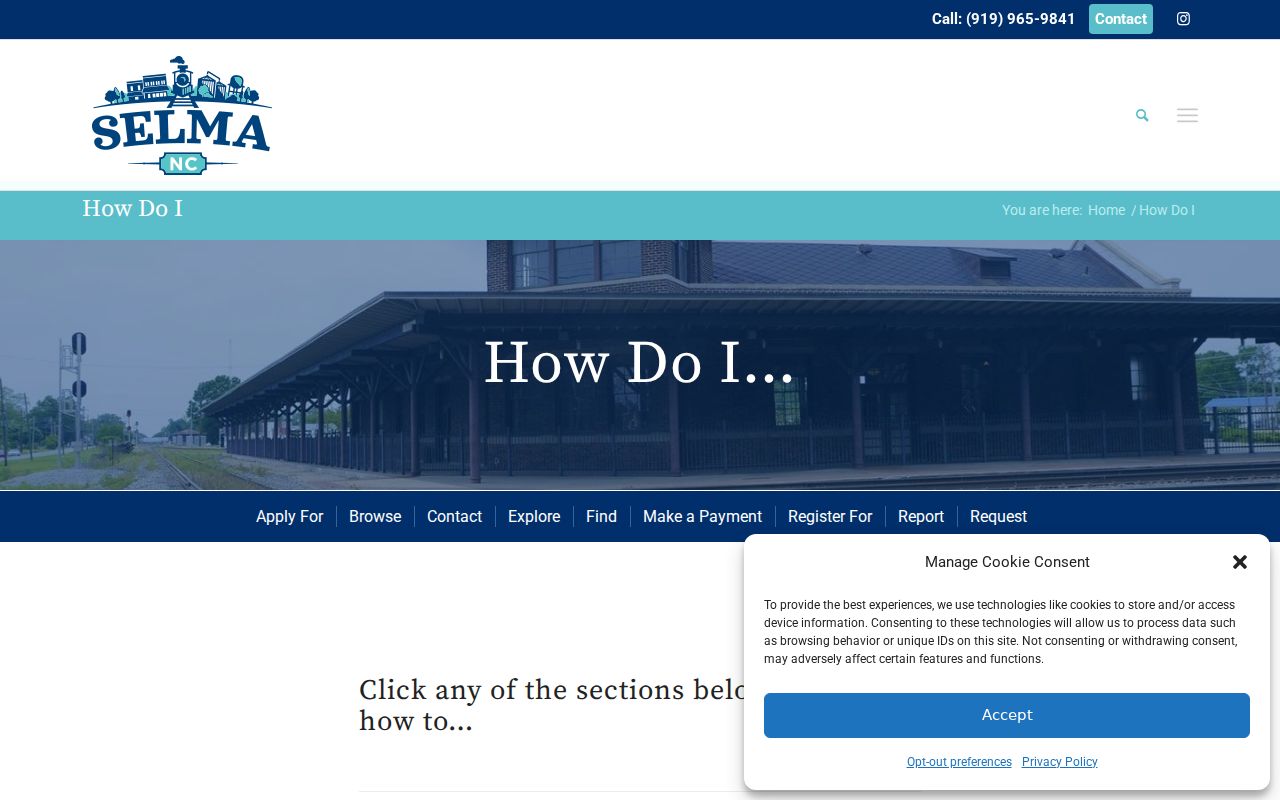
The two channels should not be treated as duplicate databases. Name the custodian and record type in the request.
Booking and Arrest Records in Selma
A Selma Police arrest moves into the Johnston County custody system rather than a separate town jail database. Police retains its arrest and incident material. Johnston jail creates the booking record and publishes a reduced current-custody view. The sheriff inquiry may show the name, arrest date, and primary charge while a person remains in custody. It does not function as a lasting Selma arrest archive.
Search the Johnston active-inmate inquiry, then call 919-989-5010 if a recent arrest is not clear. A person could have been released or transferred. Check eCourts for a filed case, but allow for timing between arrest and filing. The county arrest search resource provides the deeper jail and booking context.
Note: Absence from the live Johnston roster does not prove that no Selma arrest or later court file exists.
Selma Arrest Record Boundaries
Selma's rail and highway setting around I-95 and US 70 makes the arresting agency especially important. Conduct near Selma may produce a record from Selma Police, the Johnston County Sheriff, or a state patrol agency, depending on the place and response. Do not assume that every event with a Selma address belongs to town police.
Read the citation, process, booking entry, or court file for the agency name. Send the report request to that agency. If the active jail list supplies only a primary charge, use the booking date and agency to locate the report, then compare the filed charges in eCourts. This avoids asking Selma Police for a report created by another office.
Location details can narrow the route when the agency is not yet known. Keep the roadway, nearest intersection, event time, and any process number. Those facts help distinguish a town response from a sheriff or highway-patrol matter. Once the creator is clear, ask only for that office's existing report and carry its number into the Johnston court search.
The Selma Municipal Court File
Selma has no separate town-run criminal court database. State District Court handles misdemeanors, infractions, and preliminary felony matters for Johnston County. Superior Court handles felony trials. Fine-only state charges and infractions also move through District Court rather than a Selma municipal criminal court.
| Court Name | Johnston County District Court and Superior Court |
|---|---|
| Case Types Heard | Misdemeanors, infractions, preliminary felony matters, and felony trials in the proper division |
| Case Lookup Channel | North Carolina eCourts Portal, courthouse public terminal, or Clerk of Superior Court |
| What the Docket Shows | Case number, filing date, charge, events, status, disposition, judgment, and sentence when public |
| Copies & Fees | Ask the clerk for copy costs; a certified Johnston-only name search costs $25 |
A Selma location may identify where the event occurred, but the official criminal file is still a Johnston General Court of Justice record. Use the case number to keep that court file tied to the correct Selma event and police report as it moves through later hearings and disposition.
Selma Criminal Cases in eCourts
Use the North Carolina eCourts Portal for remote case discovery. Search by name or case number, choose Johnston as the location, select criminal category when available, and narrow by filing dates when a name is common. Record the case number and court location. Portal may not show every image, restricted matter, juvenile record, or expunged case.
For the official file, contact the Clerk of Superior Court at the Johnston County Courthouse, 207 E. Johnston Street, Smithfield, NC 27577. The clerk's main line is 919-209-5400, and posted weekday hours are 8 a.m. to 5 p.m. Public terminals are free to search, though printing may cost. A certified Johnston-only search costs $25 through AOC-CR-314.
Note: Portal is a case-discovery tool, not the certified Selma criminal-record product offered through the Johnston clerk.
How Selma Records Reach the County
A Selma officer creates the incident and arrest material. Johnston jail creates the booking file when custody follows. A magistrate makes the first probable-cause and release decision, and the clerk opens the state court case. District Court handles misdemeanors and early felony proceedings. A felony may move to Superior Court through the proper charging route. Dispositions then flow back into criminal-information systems.
Record flow: Selma Police Department › Johnston County Courts › North Carolina State Bureau of Investigation
Police data is often the first local record. Jail data answers current custody. Court data shows what prosecutors filed and how the judge resolved it. SBI organizes fingerprint-linked arrest cycles and reported outcomes for a subject's own statewide review.
Selma Police and Certified Records
A Selma police report and a certified Johnston search are not competing versions of the same product. The report concerns one agency event and may contain public facts plus protected investigative content. The certified court search is a $25 clerk search for name-based Johnston County court records. It does not cover every North Carolina county and is not an SBI fingerprint history.
| Selma channel | Scope | Key limit |
|---|---|---|
| Selma Police report | Local incident, crash, or arrest material | Does not show the final court disposition |
| Johnston certified search | One county's court records under the searched name | Not statewide and not fingerprint-based |
| SBI Right to Review | Subject's own statewide repository history | Requires fingerprints, form, payment, and mail |
Select the source that answers the actual question. Compare case numbers and dispositions before drawing a conclusion from an allegation.
Selma Record Sources by Place
Selma's official town site gives the municipal context for police and clerk access. The image below comes from the Town of Selma website.
The town identity does not change the boundary between custodians. Police maintains its reports, the Town Clerk handles general municipal requests, the sheriff manages current county custody, and the clerk of court maintains criminal cases. The source named on the original document is the best routing clue.
No verified Selma Police mobile app appeared in the official research. Use the official town, Police, sheriff, and court web channels rather than an unofficial app or commercial people-search product.
When a person no longer appears in the Selma-related jail search, the next source depends on what happened. Call the Johnston jail for a recent release or transfer. Search Selma case details in eCourts for a filed charge. If the person entered state prison, probation, parole, or post-release supervision, use the NCDAC Offender Public Information Search. NCDAC covers state custody and supervision, not the Selma police report or the county jail's past population.
Selma Record Access Rules
The North Carolina Public Records Law applies to existing Selma government records. It allows inspection and copies at reasonable times and permits reasonable copy costs. The town need not create a criminal-history compilation it does not already maintain. G.S. 132-1.4 generally excludes criminal investigative and intelligence records from ordinary public access, but it identifies public incident and arrest facts that an agency must separate from protected material.
A complete Selma request should state requester contact, event date and place, involved name, incident or crash number, exact record sought, and preferred delivery method. Ask whether Selma offers certification and whether a current copy fee applies. The official Selma pages did not publish a fixed form fee. If Police does not hold the record, use the Town Clerk for municipal routing, the sheriff for jail custody, or the Johnston clerk for the criminal case.
Chapter 132 does not require Selma to answer a broad question by building a new history from many files. Ask for the named Selma report or the listed public arrest facts instead. If the request concerns 911 data, body-worn camera recordings, victim details, or an open investigation, special restrictions may apply. A public incident summary can still provide the event time, date, place, nature, alleged violation, and arrest circumstances that the statute makes public. Keep the agency response with the final record so the next custodian can locate the same event even when dates or charge labels later change.
Key Statutes:
North Carolina Public Records Law governs inspection and copying of existing municipal records.
G.S. 132-1.4 distinguishes public arrest and incident facts from protected investigative records.
Chapter 15A, Article 5 governs North Carolina expunctions and later access restrictions.
Ask for the public incident summary when a full file is withheld. Juvenile, sealed, expunged, victim, witness, and sensitive investigative information may remain restricted.