
Johnston County Criminal History Checks
No single Johnston County office holds every criminal record. Begin with the free North Carolina eCourts Portal when the goal is to find a filed case. The Johnston County Clerk of Superior Court then supplies the official file, certified search, or copy. Use the sheriff's current-inmate inquiry for present county custody, and use state repositories only for the records they are designed to return. A full name helps, but a case number, middle name, filing date, or known agency is far safer when several people share a name.
The best check follows the record from the event to its outcome. Keep each case number and compare charges one by one. A jail label can describe an intake event, while the court file can show dismissal, acquittal, conviction, or another disposition. For review of one's own fingerprint-linked statewide history, the North Carolina State Bureau of Investigation offers its Right to Review process.
- Search eCourts by exact case number, or use a name with Johnston County, criminal category, and date filters.
- Open the result and note the court, case number, filing date, charge, and current status.
- Compare current custody in the Johnston Active Inmate Inquiry when an arrest or jail stay is relevant.
- Ask the clerk to inspect the case file or judgment when Portal lacks an image or the status is unclear.
- Order the proper certified county search or fingerprint-based self-review when an official record is needed.
Johnston County eCourts Search Fields
North Carolina eCourts Portal is Johnston County's main online case-discovery tool. Johnston joined the Odyssey pilot in February 2023, well before the October 2025 statewide completion. That longer history matters when an older paper file and a newer Portal entry do not look alike. Portal is free public case access, but the Judicial Branch says it is not the certified criminal-background-check product.
| Portal control | Use | Johnston County tip |
|---|---|---|
| Search criteria | Name or case number | Use the exact case number first when known |
| Location or county | Limits the court area | Select Johnston to remove other counties |
| Case category | Filters record type | Choose criminal when the option appears |
| Filed date range | Narrows broad results | Useful for common names and old cases |
| Party or attorney | Changes search mode | Use only details tied to the known case |
The official courthouse source shows where Portal findings can be checked in person.
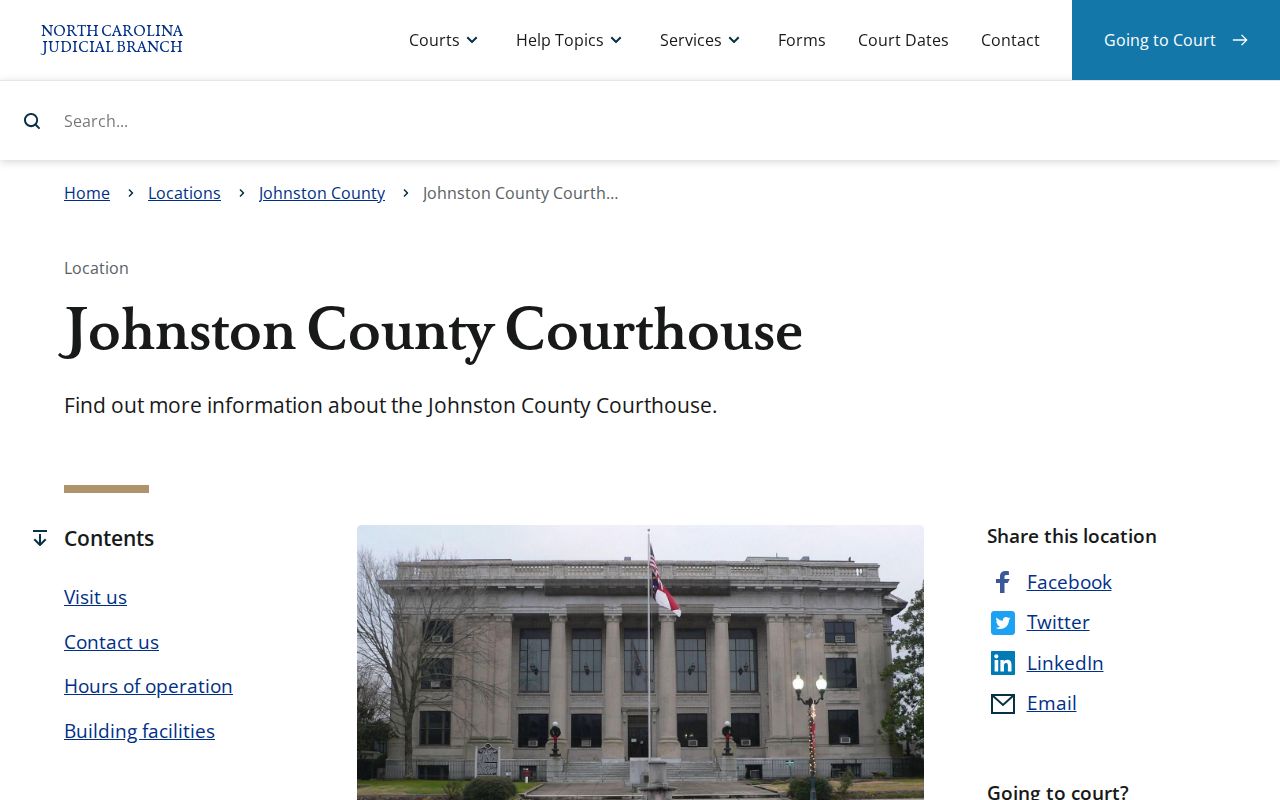
The courthouse is the record counter for local criminal case files, certified Johnston County searches, public terminals, copies, and expunction petitions.
Official Background Checks in North Carolina
North Carolina does not offer a general-public SBI name-search portal. Instead, the Clerk of Superior Court can run a certified name-based search of Johnston County court records. A visitor can also use a courthouse terminal for a free noncertified search of countywide or statewide court data. Online Portal results remain a discovery aid, not the formal check product.
For one's own statewide repository record, use the NCSBI Right to Review. It requires a current SBI form, rolled FD-258 fingerprints, payment, and mail submission. Law-enforcement agencies or other fingerprint providers may take the prints, but Johnston County research did not confirm one permanent site or a fixed local print fee. Call before traveling. An FBI Identity History Summary is also subject-only and requires fingerprints.
The North Carolina Judicial Branch comparison of record-check routes distinguishes the clerk, terminal, Portal, and SBI choices.
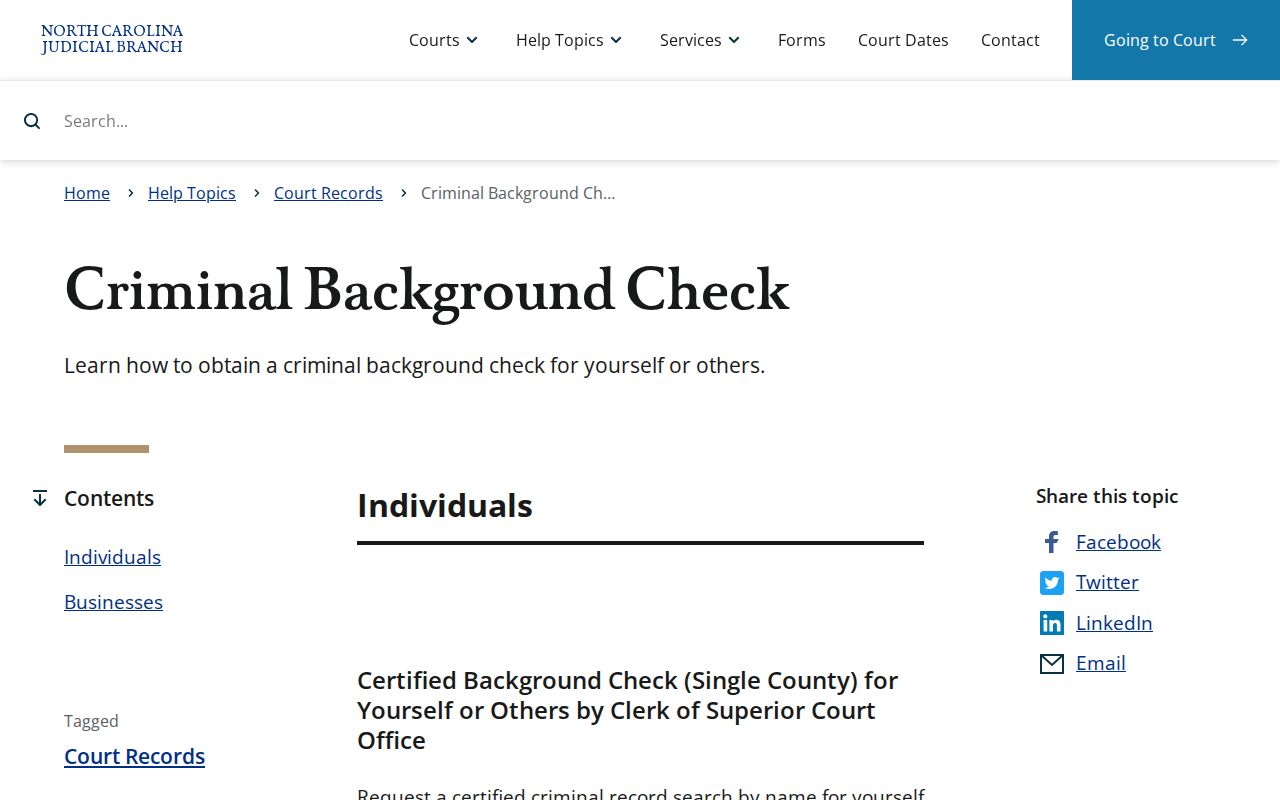
The right route depends on scope: one county's court history, statewide court data, or the subject's own fingerprint-linked repository history.
Johnston County's Certified Search Limit
The Johnston County certified search costs $25 and covers this county's court records only. Submit form AOC-CR-314 to the Clerk of Superior Court. The form asks for the searched name and related identifiers, aliases, requester details, and certification choice. Read the current form before filling it out because its fields and revision date can change.
Mail the request to the clerk at PO Box 297, Smithfield, NC 27577. A mailed request accepts a money order or certified check, not a personal check. At the counter, accepted payment includes cash, credit card, money order, or certified check. The free public terminal and free Portal can help locate a case, but neither turns an online result into a certified Johnston County search.
| Record route | Scope | Known charge |
|---|---|---|
| Certified clerk search | Johnston County court records | $25 |
| Courthouse terminal | County or statewide court data | Free search; printing may cost |
| eCourts Portal | Online public case information | Free |
| FBI identity summary | Subject's own FBI history | $18 FBI fee, plus any fingerprint service |
Note: A name-based Johnston County court search is not the same record as an SBI fingerprint-based Right to Review.
Kinds of Johnston County Criminal Records
Johnston County criminal records are created at different stages. An incident report begins with the sheriff or a city police department. An arrest record describes an accusation and the circumstances of custody. The jail makes a booking record. A magistrate or court process starts a case, and the clerk preserves charges, hearings, orders, outcomes, and sentences. SBI groups fingerprint-supported arrest cycles and reported dispositions by identity. NCDAC keeps prison and community-supervision information.
- Incident and arrest reports: request them from the sheriff or municipal police agency that created them.
- Booking and custody records: use the Johnston County Jail for current local custody.
- Court case files: search eCourts, then verify pleadings, orders, and judgments with the clerk.
- Warrant process: confirm through the sheriff, magistrate, clerk, and linked case because no public county warrant portal was verified.
- State records: use SBI for one's own repository review and NCDAC for prison, probation, parole, or post-release data.
Johnston Custody and Supervision Records
The Johnston Active Inmate Inquiry is a current-custody board. It displays a roster count, a data-updated time, name, primary charge, and arrest date. It can be sorted by arrest date or last name. A person may disappear after release or transfer, so no result does not prove that no arrest took place. The public list is not a complete historical arrest database.
Move to the NCDAC Offender Public Information Search when the person has entered state prison or state community supervision. Probation, parole, and post-release supervision are state-run in North Carolina. The court judgment establishes the sentence, while NCDAC supplies current public supervision or custody status. NC SAVAN and VINELink can add custody notifications, but they do not certify a court outcome.
Historical arrest or booking details require another route. Ask the sheriff or the arresting city agency for the existing record and narrow the request by date, location, report number, and record type. For current jail questions, call 919-989-5010. The jail's public list shows only a reduced set of fields, so do not assume it contains every charge, bond term, release date, or court setting held in the underlying file.
Johnston County Criminal Records: What They Contain
A court file is case-oriented. It can show a case number, county, filing date, defendant, charge and statute, attorneys, scheduled events, process, disposition, judgment, sentence, and financial balance. A jail record is custody-oriented. SBI history is event-oriented, grouping identity data, arrest cycles, contributing agencies, charges, and reported dispositions. These structures explain why a charge may be worded differently across systems.
| Name and identifiers | Reported name, aliases, limited public demographics, and identity numbers where the specific system may lawfully show them |
|---|---|
| Arrest and booking | Arrest date, agency, process or case number, intake data, charge, and custody facts within the source's public scope |
| Charges and statutes | Alleged offense, North Carolina statute, offense class, and separate count-level entries |
| Disposition | Dismissal, acquittal, conviction, or another final or interim outcome reported by the court |
| Sentence | Judgment, custody or probation terms, restitution, and other public conditions |
| Custody or supervision | County jail status, state prison status, probation, parole, or post-release data in the appropriate system |
Names are not unique. Match the case number, dates, county, agency, and charge before treating two entries as the same event.
When Johnston Criminal Cases Are Missing
A missing Portal result can have several causes. The filing may be too new, the name may be spelled in another form, an older file may not expose an online image, or the record may be juvenile, sealed, restricted, or expunged. Start again with an exact case number. If only a name is known, add Johnston County, a date range, and the criminal case category.
If the entry still does not appear, use a public terminal or contact the clerk at 919-209-5400. Ask about the paper or electronic file by case number and year. The clerk, not the central NCAOC public-record request form, is custodian of Johnston criminal case files. For discrepancies in one's own SBI history, compare the repository response with certified court papers and identify the contributing arrest agency and disputed disposition.
- Pending
- The court has not completed the case.
- Disposed
- The court recorded an outcome, which is not automatically a conviction.
- Nolle prosequi
- The prosecutor formally chose not to proceed at that time.
- Order for arrest
- North Carolina process directing custody, often after a failure to appear or comply.
North Carolina Public Access Laws
The North Carolina Public Records Law governs many agency records, while court records and criminal investigative information have their own rules. The safest request goes to the actual custodian and names an existing record. Ask the clerk for a case file, the arresting agency for its report, the sheriff for jail material, SBI for one's own repository review, and NCDAC for state custody or supervision.
Key North Carolina laws:
G.S. 132-1 defines public records and declares them the people's property.
G.S. 132-6 and 132-6.2 govern inspection, copies, costs, and the rule that an office need not create a new compilation.
G.S. 132-1.4 separates public incident and arrest facts from protected investigative material.
G.S. 7A-109 provides for court-record inspection and copies under clerk supervision, subject to restrictions.
G.S. 15A-151 limits disclosure from confidential expunction files while preserving specified official access.
Public access does not open every investigative page. Juvenile records, protected victim or witness details, sealed proceedings, personal identifiers, and expunged material can be withheld or redacted.
Johnston County Warrant Fallback Chain
No verified public Johnston County warrant name-search portal was found. The active-inmate roster may show an arrest tied to failure to appear or an order for arrest, but it is not a list of outstanding process. For one's own possible warrant, call the sheriff at 919-989-5010 and the criminal magistrates at 919-209-5462. Then search the related eCourts case and confirm details with the clerk at 919-209-5400.
Arrest warrants, orders for arrest, and search warrants are not the same. An order for arrest can follow a failure to appear or comply. Search warrants may remain sealed during an investigation. Municipal police or another court may control the underlying matter. Confirm the issuing court, case number, and current instructions before acting on an unverified result. A payment does not always clear process at once.
Restricted, Sealed & Expunged Records
North Carolina uses the term expunction. Eligible arrest, charge, or conviction records may be sealed, removed, or destroyed under the applicable part of Article 5 of Chapter 15A. Most matters require a petition in the county of the charge or conviction, which places Johnston cases with the Clerk of Superior Court. Eligibility varies by outcome, offense, age, prior record, and waiting rules, so one time period cannot describe every route.
The general filing fee is $175. Dismissed or not-guilty petitions usually carry no fee unless the dismissal followed diversion or deferred prosecution. Some petitions need affidavits, record checks, and notice to the prosecutor or SBI. Processing can take months. Keep the signed order because agencies may later remove the clerk's expunction file itself.
The Judicial Branch expunction resource links the current petition forms and instructions.
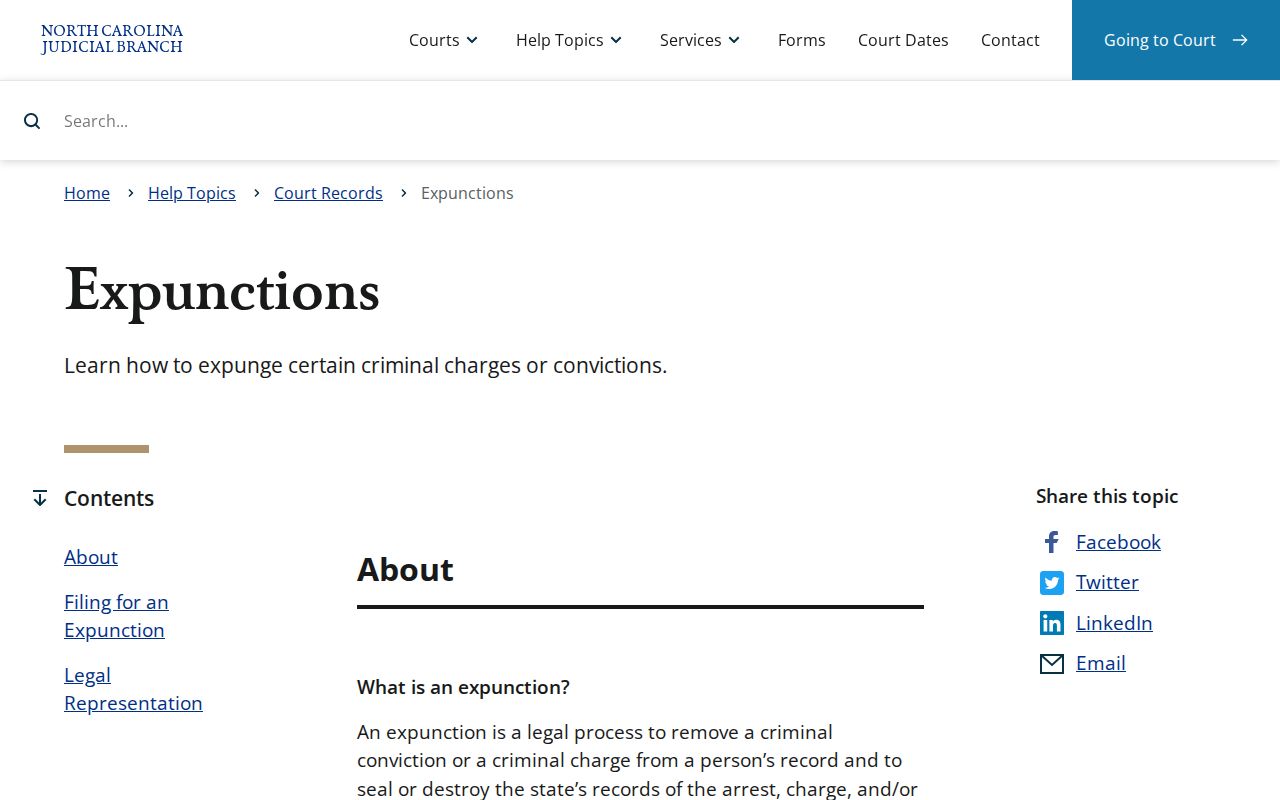
If a covered Johnston County case stays visible after several weeks, contact the clerk with the order and case details, then compare one's SBI Right to Review.
Federal Records Beyond Johnston County
Johnston County falls within the U.S. District Court for the Eastern District of North Carolina. Federal dockets do not appear as complete state cases in eCourts. Search them through PACER after account registration. PACER uses its current per-page fee schedule and billing threshold, so check the posted terms before opening many documents. Federal custody belongs in the Bureau of Prisons locator rather than the Johnston jail or NCDAC systems.
The official PACER entry point separates federal case access from Johnston County and North Carolina court searches.
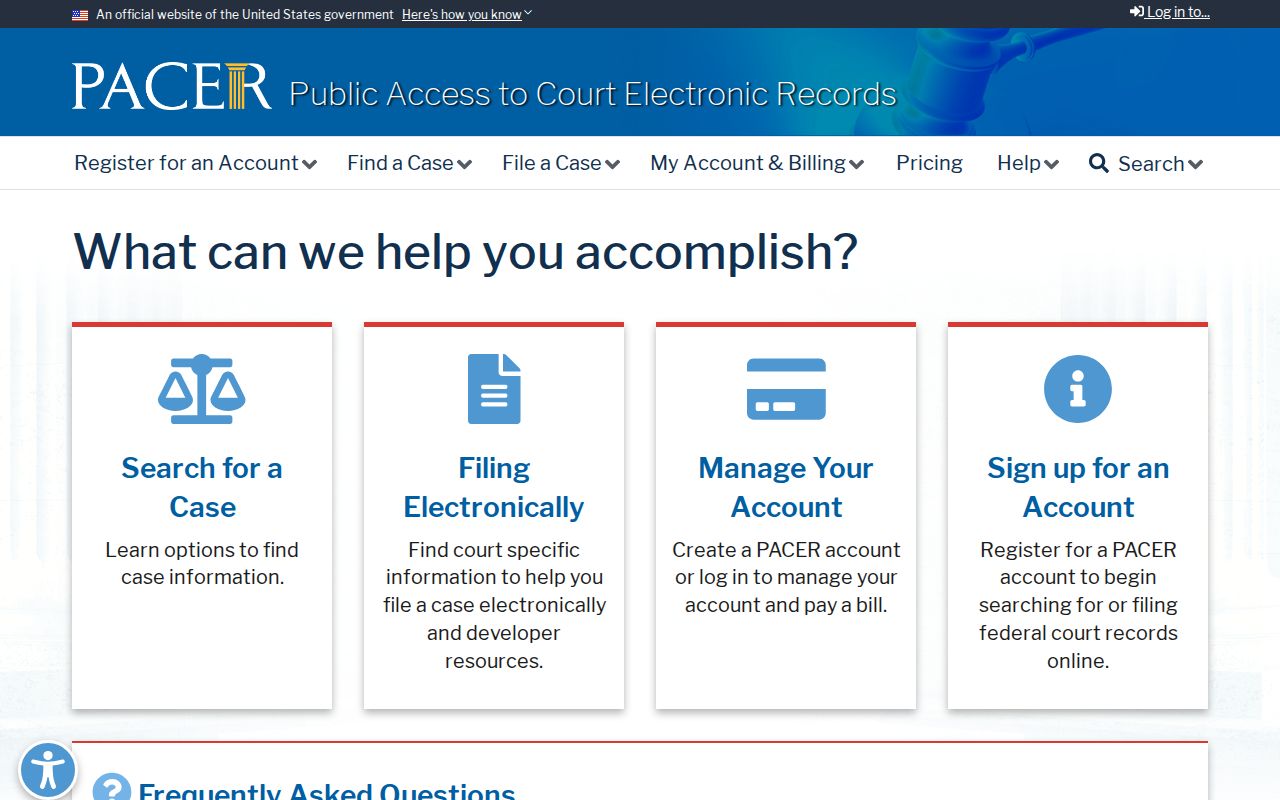
Use the court named on the charging document to decide whether eCourts or PACER is the correct docket source.
An FBI Identity History Summary answers a different question. It is a fingerprint-based review of the subject's own FBI-associated history, not a search of all papers in a federal prosecution. The base FBI fee documented in the research is $18, with fingerprint or channeler costs potentially added. Compare any listed event with the court that handled the underlying case.
City-by-City Criminal Records in Johnston County
Clayton, Smithfield, and Selma police departments keep their own incident and arrest reports, while criminal prosecutions run through the Johnston County courts. North Carolina towns do not operate separate municipal criminal case databases. A city report therefore starts with the city police custodian, current custody moves to the Johnston County Jail, and the court outcome comes from eCourts or the clerk in Smithfield.
These city routes matter because the town name does not determine the record holder by itself. A Clayton or Selma event may involve town police, the sheriff, or the State Highway Patrol. Smithfield is both a municipality and the county seat, yet Smithfield Police Records and the Johnston clerk remain distinct offices. Read the agency name on the report or case process before sending a request.
Clayton Record Check
Clayton Police Records keeps town reports and sends court-history requests to the Johnston County clerk.
Smithfield Record Check
Smithfield Police and the county courthouse sit in the same town but remain separate record custodians.
Selma Record Check
Selma Police handles town reports; Johnston County systems hold jail and criminal case records.
Johnston County Criminal Court Calendars
Johnston County's local administrative schedules separate criminal matters into named streams. The Judicial Branch posts DWI, criminal domestic violence, disposition, probation cause, probation violation, bond forfeiture, and Benson calendars. A Portal event should be compared with the current schedule because not every criminal matter is heard in one room or on one list.
In February 2025, the Judicial Branch announced a $147,000 Governor's Highway Safety Program grant to help expedite DWI cases in Johnston, Mecklenburg, and Wake counties. The initiative is a useful reminder that court scheduling and case movement can change. Check the current Johnston County calendars instead of relying on an old saved date.
Note: A calendar setting shows a scheduled event, not the final outcome of the Johnston County criminal case.